Thursday, February 17, 2011


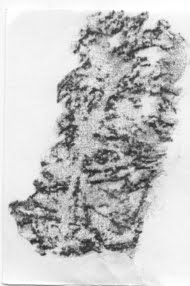
As we look at the new prints each week it is sometimes difficult to realize that the images have come from stone plates that are very likely better than 250 years old. I tell people that if I had been told about this art form, I would have doubted that it could exist. I do think that the images are very modern in appearance and, that it is shocking to see art work of such quality engraved on such small plates.

I do not correct or alter the images. I should point out that many of the stones have been damaged. I make no attempt to repair anything. Once again I post the images for those who understand and appreciate the opportunity to see rare graphics that are totally new to the art world. At the time that this blog publishes I am the only person that has viewed the selected prints.

Before I began this blog, I searched the internet looking for art work like I had become accustom to. I found nothing that resembled these images, so I decided to show what I have found. I hope that you will continue to visit this blog and that you enjoy the new prints!

Thursday, February 10, 2011

Art or Gold ?


Which do you think is better art or gold? It does appear that the North American indigenous peoples had a money system based on original art. Actually they traded objects or goods and then used art work to even the transition to the satisfaction of the parties evolved. This was probably particularly true in North America where there was little gold to be found. The southwest had both gold and silver but this was a limited supply. Actually I think that they only valued gold as a medium to use to create art!

As I have pointed out in earlier post, these prints came from stones that are examples of these “Trade or Barter” stones. Each stone was engraved individually. In modern systems we use metal dies or plates to stamp or print metal or paper money. This method naturally depends on the technology needed to create both plates and dies and then the stamping and printing equipment as well.

Now lets go back to our topic statement, Which do you think is better art or gold? Today many still prefer art as an investment, while others prefer gold. I am not going to draw any conclusions, instead I will allow the individual reader to consider this. Instead I will pose a question, Do you think that art produces a stronger society?

Thursday, February 3, 2011


This has been a busy week for me. I am launching the new Contemporary Art website on a Google site. While it is simple by comparison to using a web editor program, it is still a lot for a beginner to learn. If your taste and interest include avaunt guard abstract art, I hope you will visit the site. I will include the URL in my next post. The title that I have chosen is “Art Studio File” so you might be able to locate the site if you would like a look now. Like I said most of my time has been spent there so I have prepared an abbreviated post for this week!

I am preparing to publish these blog post in book form. There will be added graphics and photographs as well. I will relate the particulars as the project unfolds

Here are several new images. I have updated to Picasa 3 this has greatly improved the quality of the graphic images. Once again I am learning as I go along. Thank You for your interest in my blog.

You can reach me at ciaamuseum@gmail.com

Thursday, January 27, 2011


Let's take a minute here at the beginning of this post to understand the difference between drawing and printmaking. Drawing is a direct process, one art work is produced. While an artist might make two drawings very similar, each work would be an individual art work made by hand. Printmaking is sometimes referred to as plate making. Here the art is created by first building a plate from some material such as wood , stone, plastic or metal. The plate is inked to produce the art work, which may be any number and each work is exactly the same.

The indigenous American artist probably did design these stones to be used as printing plates, however they mixed printing and drawing techniques in practice to produce beautiful effects. It is very likely that more than one art work might have been produced with a single plate. Through a process called “selective inking” only a portion of a particular plate was used to create an art work. When we observe the prints that appear here, we must take into account that the entire plate is visible, printed in one rub, these are documentary proofs of the entire plate structure.

You can reach me at ciaamuseum@gmail.com

Thursday, January 20, 2011


I do hope that you are enjoying the post on my blog from week to week. Like I have said in previous post, it is not as important what I write as it is obviously the rare illustrations that make this blog unique..I would like to add a word of further explanation here. When I read that Google had created Blogger I immediately thought that this would be an excellent way to offer everyone an access to the images in the collection . Please let me say that I am very satisfied with the program, and that I will continue to post. I haven't forgotten that I did say that I would also show photographs of some of the effigy stones, this is taking longer than I anticipated, but eventually there will be those illustrations as well.

Not all of us see the same reality, sometimes what we see is the product of our individual development or possibility our personal preparation. Education does prepare us for understanding and appreciating the Arts. When an individual works and acquires advanced degrees, we should all seek to honor and serve that person by accounting and posting our personal studies when we honestly feel that a truth of worth has been found. I do feel that this is the case here, that The Collection Of Indigenous American Art is an unusual collection of works, and that placing some of these works on public view is in order.

You can contact me at ciaamuseum@gmail.com

Thursday, January 13, 2011


When I began the actual printing of the stones in my collection I was quickly aware that there would be many people that by all means would see the art work as a collectable domain, that to many it might represent an alternative to the” Known Artist” collections that fill gallerys and museums all over the world today. It is actually rare for “ Unknown” works to appear in large numbers in the art market. The art of unknown artist are commonly barred from most exhibitions, so there is little opportunity for the public to see such work.

Have you ever tried to select an art work for view in a public place? I mean in a place or location where a number of individuals have to agree on a particular piece! Often indeed the attempt fails entirely and the wall remains bare, “indeed”! Political ties, Religious beliefs, Nationality or the personal habits of the artist are the types of foolish predigest that will frequently halt the process, ill feelings often linger for months.

I see the art of unknown artist as a natural choice, especially when the art work itself is quite good and interesting to view. What is better than seeing a unique graphic that is entirely new to you and all other viewers as well.

Contact me at ciaamuseum@gmail.com

Thursday, January 6, 2011


Well now we have the new year started, do hope that yours was a nice holiday. I would like to explain about the prints that they are enlarged somewhat by the process of importing them into the Blogger program. I am still learning about the tools that I am attempting to use. The basic idea here is that I create an artist proof using a Crayola Crayon. Most of the plates are printed only twice. The first rubbing is made on common notebook filler paper and the second is on equally common word processor paper. Then the second proof is scanned into my Epson NX400 printer which exports the image to my HP pavilion desktop, where the images are stored in the pictures file. I then use Picasa software to order the prints that are then uploaded to Picasa Web Albums on-line. You can see all of the prints that have been published here on the blog and some that I have omitted as well.

Once again please let me point out that recognizing the image is in many cases a difficult study I try to place only prints that I am certain of, but that does not guarantee that they will all be intelligible to all viewers. I do by all means recommend that the viewer move back from the monitor to study each print. Also, rotating the image 360 degrees in 90 degree clicks shows other faces of of what are multiple viewpoint compositions. Many times you may like a particular work in another position. We must remember that the artist that created these art works did not think of their works as having a top or bottom.

You can reach me at ciaamuseum@gmail.com